Verdict
The most polished free-to-play open world on Windows, carried by world-class exploration and combat — and dragged, as ever, by a thin endgame and a gacha that never stops counting your Primogems.
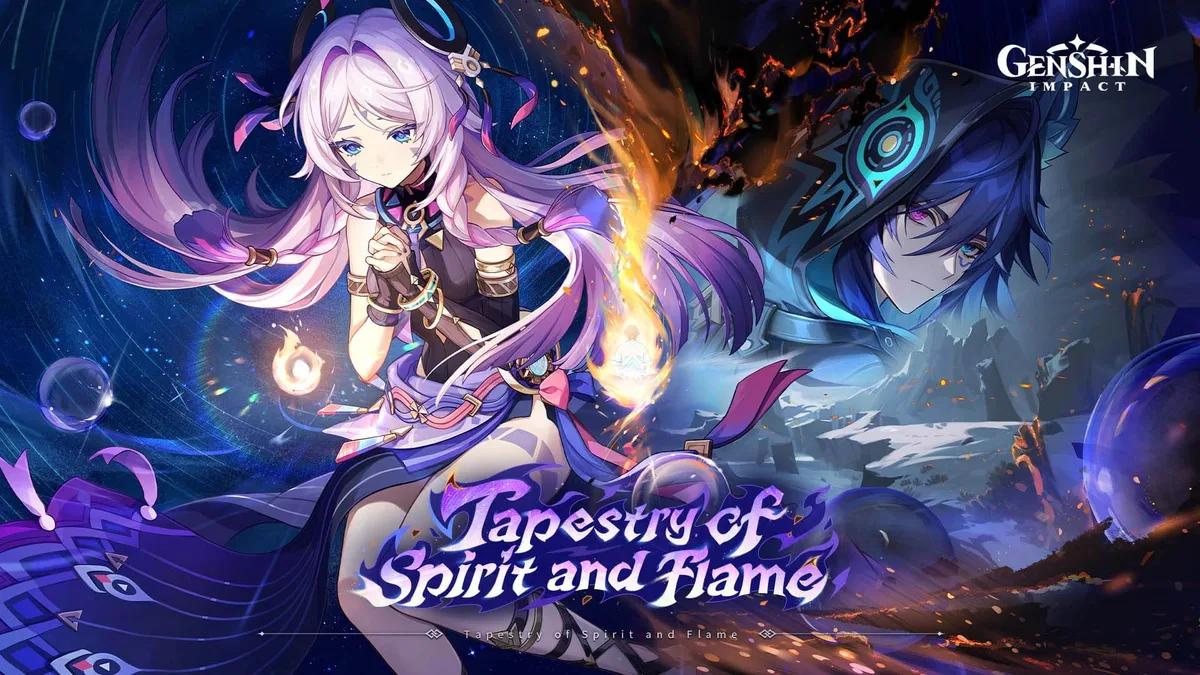
There's a stretch, usually your first weekend in a new Genshin Impact region, when the game is close to untouchable. You crest a hill you climbed just to see what was on the other side, spot a glimmer of a puzzle in the distance, and three hours vanish. No other free-to-play game on Windows makes wandering feel this good. Then you finish the region, hit the wall the daily grind puts up, and you remember what Genshin actually asks of you in the long run.
Five years on from launch and now with all seven Archon nations finally open — Snezhnaya, the Cryo Archon's frozen homeland, arrived with Version 7.0 "Everwinter Without Mercy" in August 2026 — Genshin Impact is still the benchmark everyone else in the gacha space measures against. It's also still the game most likely to leave a committed player quietly frustrated. We've put in the hours across the new content to tell you where it lands in 2026.
Exploration is still the main event
This is where Genshin has never been beaten. Every region is hand-built rather than procedurally smeared across a map, and it shows in the density. There are no filler stretches — climb anything, glide off anything, and there's usually a chest, a puzzle, or a sight worth the detour waiting. Teyvat rewards curiosity the way the best single-player open worlds do, except it keeps getting bigger.
Snezhnaya is a strong showing on that front. The art direction leans colder and starker than Fontaine or Sumeru — all everwinter tundra, frozen peaks and Fatui iconography — and the region-specific gimmicks keep traversal fresh instead of recycling the same climb-glide loop for the tenth time. HoYoverse's pipeline for building these places is genuinely world-class, and the cadence — a substantial map expansion every several weeks, for free — is something almost no competitor sustains.
The catch is simple and it hasn't changed in five years: exploration is finite. Once you've 100%'d a region, that content is done. It doesn't respawn, it doesn't scale, and the wait for the next slice of map can run six weeks or more. Version 7.0 opened Snezhnaya across five sub-regions in August 2026 — with the autonomous Nod-Krai tucked at its southern edge — and its banner phases run through late September, but the Cryo Archon Tsaritsa herself is being held back for later in the 7.x cycle. That's the rhythm you're signing up for: feast, then fast.
The combat holds up
Genshin's elemental system remains one of the smartest hooks in the genre. You build a party of four, swap between them mid-fight, and the whole game turns on how elements react — Vaporize, Overload, Freeze, the cascading Dendro reactions Sumeru introduced. Done well, a rotation is a satisfying little machine: apply, react, swap, detonate. It's approachable enough for a newcomer to enjoy button-mashing and deep enough that a well-tuned team feels like a genuine accomplishment.
Years of power creep have complicated it, though. Newer five-stars land with kits that reshape the meta, and the gap between a thrown-together roster and an optimized one has widened. You can absolutely clear all the story and most of the world with early free characters — the game is not hard on the way down. But the ceiling has risen, and if you want to compete with the toughest content, the newest units make life dramatically easier. That's the gacha model doing exactly what it's designed to do.
The endgame is where it wobbles
Here's the honesty this review needs. For all the money and craft poured into Genshin, its repeatable combat endgame is thin. The Spiral Abyss and the Imaginarium Theater are essentially it — two rotating challenge modes and not much else. Neither scratches the itch a proper post-story loop would, and the scaling has gotten harsher, doing little to keep your older favorites relevant against the current roster.
Everything else in the "endgame" is really maintenance: dailies, weekly bosses, and the artifact grind. That last one is the real time sink and the real morale test — hunting for gear with the right main stat and a lucky roll of substats, from a system built on layers of randomness that can swallow weeks and give you nothing usable. Limited-time events help fill the calendar, but they've settled into a pattern of being cleared in an afternoon, which sends dedicated players straight back to the same handful of repeatable modes. If you want a game that keeps escalating its challenges the way an MMO does, Genshin isn't built for it.
The gacha, clear-eyed
You can't review this game without talking about how you get characters, because that's the business. Genshin runs on a wish system with a 90-pull hard pity and a 50/50 chance that your guaranteed five-star is actually the one being advertised. Primogem income — the free currency — is the tightest among the major gacha RPGs, which means free-to-play players pull slowly and have to choose carefully. Miss a character's limited banner and you may wait a year for a rerun.
It's a testament to the rest of the game that this is bearable, even generous-feeling in stretches, because so much content is free and the pity system at least caps the worst-case pain. But go in clear-eyed. If you loathe gacha on principle, or you want the fast linear progression of a premium RPG you pay for once, nothing about Genshin's model is going to win you over.
Who it's for
Genshin Impact is for the player who treats it as a beautiful, ongoing world to dip into rather than a game to grind flat. Explore each region at your own pace, pull for the characters you actually love, cap your daily commitment, and it's one of the most rewarding free experiences on Windows — gorgeous, endlessly polished, and free to install tonight on a modest rig. Treat it as a hardcore competitive game with a deep endgame, and it will disappoint you, because that game was never really here.
Verdict
Five years in, Genshin Impact is still the gold standard for what a free-to-play open world can look and feel like. The exploration and the elemental combat remain best-in-class, and HoYoverse's production values are untouchable. The persistent weaknesses — a thin endgame, an endless artifact grind, and the tightest gacha economy in its class — are just as real, and they're the reason it stops short of the very top. Go in for the world and the wandering, not the grind, and it delivers.
Rating: 8.5 / 10 — A stunning, generous open world with a shallow endgame and a demanding wallet.
Pros
- Genuinely gorgeous, hand-crafted regions that reward curiosity for dozens of hours
- Elemental combat that stays deep and satisfying years in
- Best-in-class production values, voice acting and free content cadence
- Runs beautifully on modest Windows rigs and is genuinely free to start
Cons
- Endgame is thin — Spiral Abyss and Imaginarium Theater and little else
- The gacha is the tightest of the major live-service RPGs, and artifact farming never ends