Verdict
A deep, good-looking turn-based collector with a genuinely strong PvE campaign — smothered by one of the most aggressive, relentless monetization stacks in the genre.
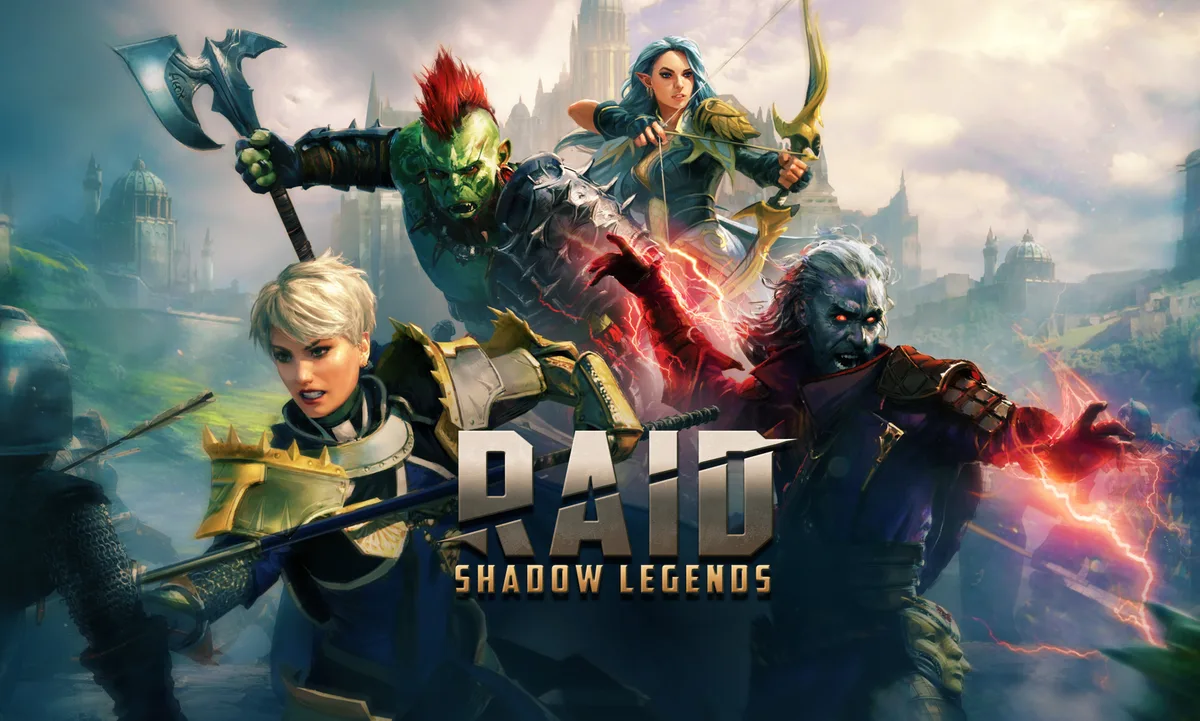
Everybody has heard of Raid: Shadow Legends. That's not an accident — the ad budget is legendary, and it's the running joke of half the internet. What gets lost in the memes is that underneath the sponsorship blitz is an actual game, and a surprisingly deep one. The problem isn't that Raid is shallow. The problem is that the deeper you go, the more insistently it asks you to pay.
Raid launched in 2018, hit Steam in 2024, and by 2026 it's a genuine juggernaut: over 86 million downloads, more than 1.2 billion dollars in lifetime spending, and a champion roster north of a thousand across sixteen factions after the Argonites arrived earlier this year. Plarium has kept a monthly patch cadence rolling and, notably, its Steam rating has clawed its way up from the low 40s at launch to a "Mixed" 61% — better onboarding, more content, same core complaint. We've played enough to tell you exactly what that complaint is, and whether the game underneath is worth putting up with it.
The collector's hook is real
Strip away the noise and Raid is a turn-based RPG built on team composition, and it's good at it. You assemble squads of four or five champions, each with a kit of skills, cooldowns and passive quirks, and the whole game is a puzzle of making those kits sing together. A team isn't just "my strongest five" — it's a debuffer to strip enemy defenses, a reviver to survive a boss's nuke, someone to boost turn meter so your carry acts first. Get the combination right and content that wrecked you an hour ago folds instantly.
That depth is the draw, and it's real theorycrafting. The champion pool is enormous, factions have identities, and the community has spent years mapping which underrated commons and rares punch far above their star rating. There's a genuine satisfaction in beating a hard dungeon with a clever budget team instead of brute force.
Presentation backs it up. Champions are detailed, the big boss encounters have real spectacle, and the PC client is a proper piece of software — it runs well on Windows, supports auto-battle for the repetitive stuff, and lets serious players run multiple instances. On a monitor with a mouse, Raid is a much better experience than it ever was squinting at a phone.
There's a lot of game here for free
Give Plarium credit where it's due: the PvE spine is fully playable without spending. The campaign, the dungeons, the Doom Tower, Faction Wars — all of it is open to free players who put in the time. The early game is deliberately generous, showering you with resources and easy wins to get the collection habit forming. For a long stretch, Raid is a legitimately fun, free RPG with tons to do.
The monthly cadence keeps that going. New champions, events, and features land regularly, versions ticking steadily upward through 2026, so the endgame rarely goes stale for the people invested in it. If you're the type who enjoys the daily-routine rhythm of a live-service collector — clear your energy, run your dungeons, chip at the tower — there's a near-bottomless well here.
Then the meter kicks in
Here's the turn. The generosity is front-loaded, and once you're hooked the game shifts from giving to selling. Raid's monetization is layered and relentless: gacha pulls on multiple currencies, a rotating wall of bundles, limited-time offers, subscriptions, events that dangle exactly the resource you're short on. The rarest and most powerful champions come from Void and Sacred shards, and those overwhelmingly live in paid bundles — packs of Ancient shards with resources can run up toward a hundred dollars. Progression at the higher levels doesn't stop for free players, but it slows to a grind that the store is always ready to shortcut.
And then there's gear. The artifact system — Raid's equipment grind — is a savage RNG sink. Even with the champions you want, kitting them out in optimal sets with the right substats is a treadmill that can eat months, and it's the real endgame for most players. It's engaging if you love an optimization puzzle; it's demoralizing if you just wanted your cool dragon to hit harder.
That tension is exactly why the Steam score sits at "Mixed" and won't climb higher. The improvements are real — onboarding is friendlier, content is steady — but the persistent, in-your-face monetization is baked into the design, and no amount of polish papers over it.
Who it's actually for
Raid is for the player who genuinely enjoys the collect-and-optimize loop and can hold a firm line on spending — or is happy to drop money and knows it. If you can treat it as a free RPG, take the generous early game, and walk away when the upsell gets loud, there's dozens of hours of clever team-building to enjoy. If you're prone to chasing a shiny legendary or hate feeling nickel-and-dimed, this game is engineered to press exactly those buttons, and it will.
Verdict
Raid: Shadow Legends is a far better game than its meme reputation suggests — deep, good-looking, and packed with content that's genuinely free to play through. It's also one of the most aggressively monetized titles in a genre defined by aggressive monetization, and that ceiling is self-imposed. Come for the theorycrafting, stay for the campaign, and keep your wallet closed and your expectations clear.
Rating: 6.5 / 10 — A smart, handsome collector you'll enjoy most by refusing to play the way it wants you to spend.
Pros
- Over a thousand champions and real theorycrafting depth in team-building
- All core PvE — campaign, dungeons, Doom Tower, Faction Wars — is playable free
- Slick presentation and a proper PC client with multi-instance and auto-battle
- Steady monthly content cadence keeps the endgame moving
Cons
- Monetization is constant, layered, and hard to ignore
- Meaningful late-game power sits behind rare shards that mostly live in paid bundles
- Gear grind (artifacts) is a brutal, RNG-heavy time sink