Verdict
The most polished and strategically deep of the big mobile MMO strategy games — a seamless world map and real commander depth, undercut only by an overwhelming start and the usual whale-tilted top end.
Most mobile strategy games hide their emptiness behind a grid of buildings and a stack of timers. Rise of Kingdoms does something the others mostly don't: it puts you on a single, seamless, zoomable map of the whole world, and lets you actually march your armies across it in real time. That one design choice is why, eight years after launch, it's still the game the rest of the genre gets measured against.
Rise of Kingdoms has been a mobile strategy heavyweight since 2018, and Lilith Games has kept it firmly relevant into 2026 — new commanders, new events, hero rebalances, and a steady stream of performance work, including faster loads and better anti-cheat this year. It plays beautifully on Windows through the official PC client, which is genuinely the best way to experience it. We put in the hours across kingdom-building, commander leveling and alliance play to sort the strategy from the sales pitch.
The map is the magic
Open the game and zoom all the way out and you're looking at your entire kingdom rendered as one continuous world — no menu-hopping between separate screens, no abstract "attack" button. When you send troops to a barbarian camp, a resource node, or an enemy city, you watch them physically travel there. That real-time march changes everything. Timing, positioning and reinforcement suddenly matter, because your armies exist in space and take time to get places. Ambushes are possible. Rallies against a big target become a genuine logistics problem your alliance has to solve together.
It sounds small. It isn't. It's the difference between a spreadsheet with a fantasy skin and a strategy game that feels alive, and Rise of Kingdoms remains the cleanest execution of it.
Depth that actually rewards knowing things
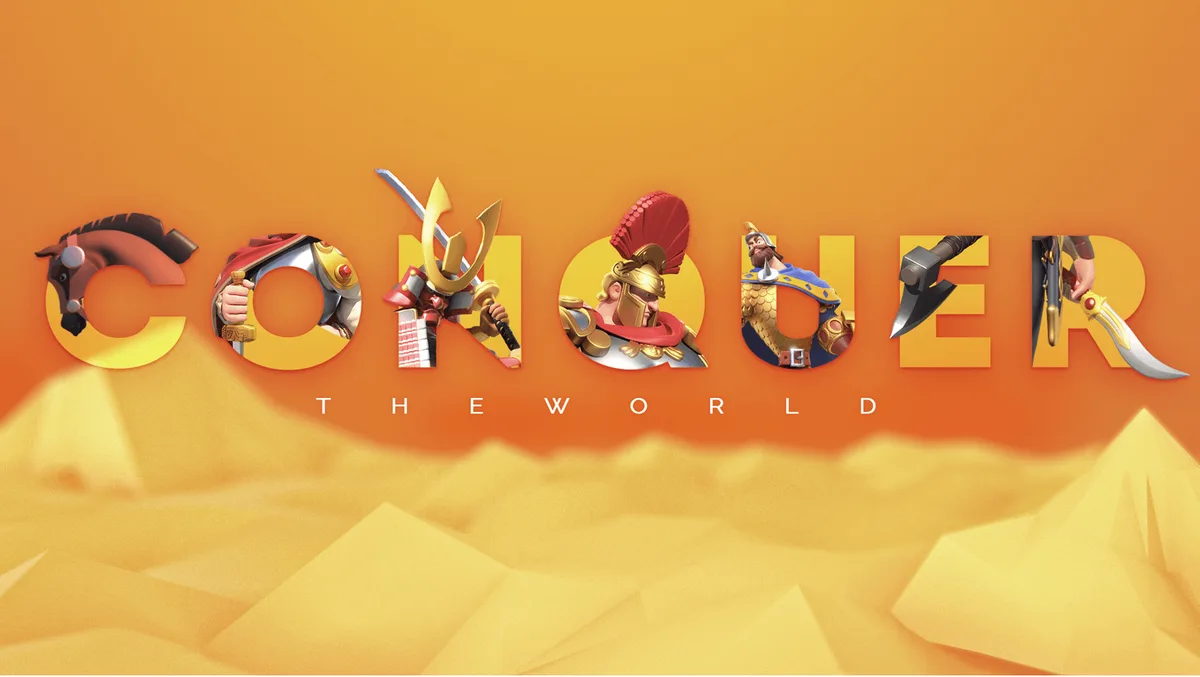
The commander system is where the theorycrafting lives, and it's genuinely deep. You collect historical and legendary commanders — from Julius Caesar to Joan of Arc — each with skill trees and, crucially, pairings. Two commanders lead an army together, and the right pairing multiplies their strengths: an open-field cavalry duo, a defensive garrison anchor, a peacekeeping farmer for clearing the map efficiently. Knowing which commanders to invest in, which to skip, and how to talent them is the real skill ceiling, and the community has spent years mapping it.
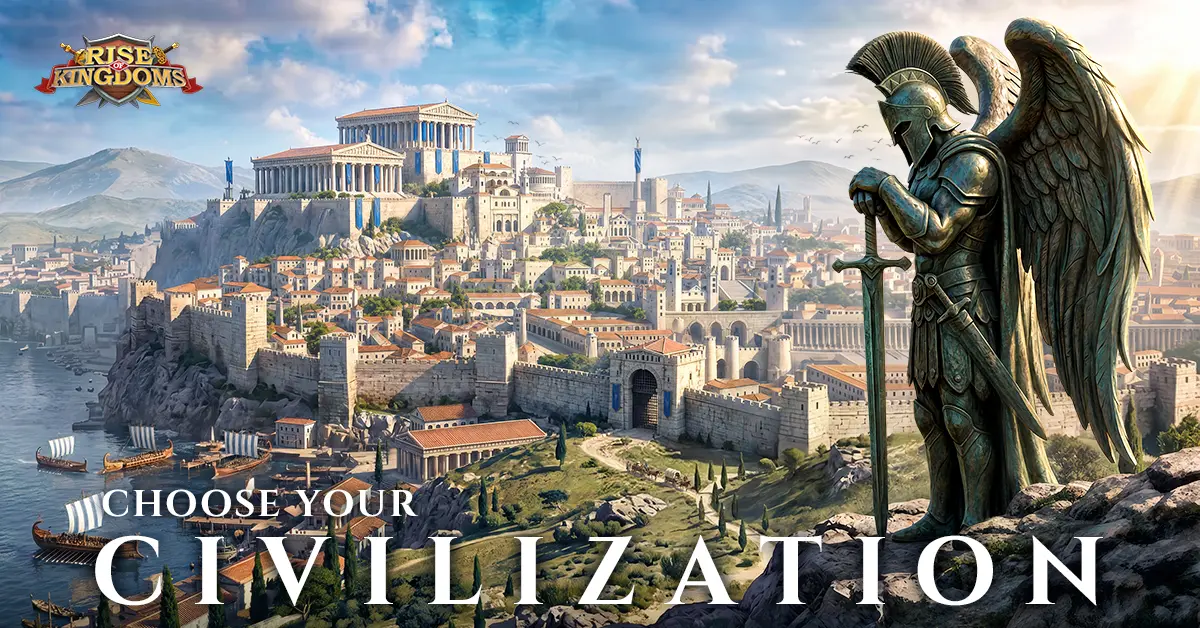
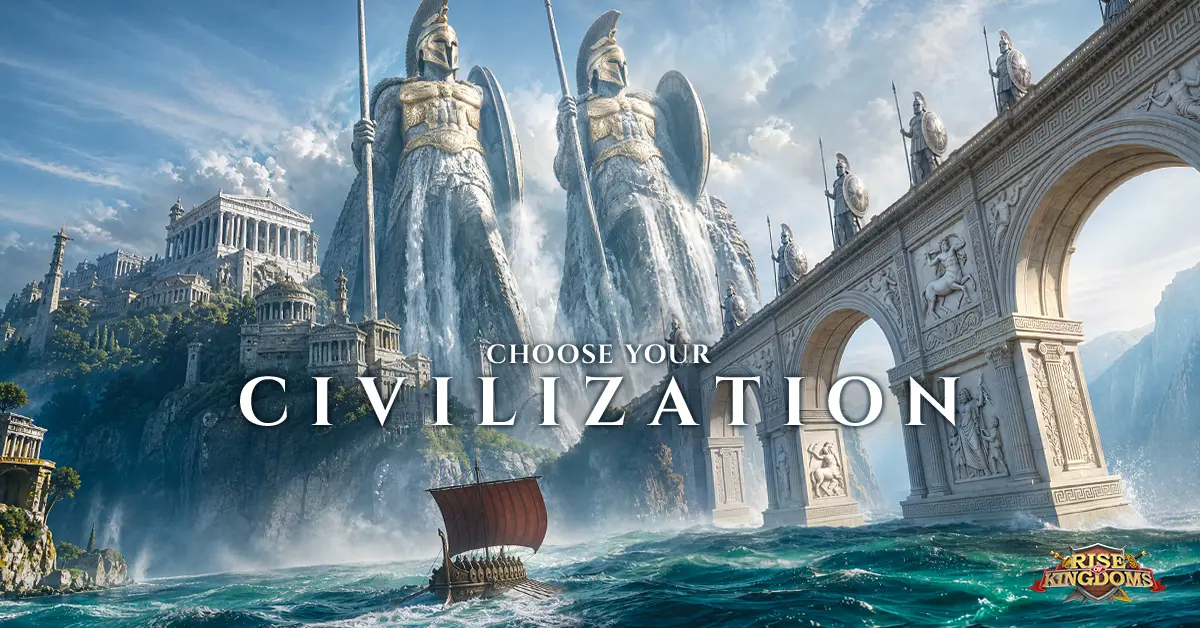
Layered on top are eleven civilizations — Rome, China, Japan, Britain, Byzantium and more — each with its own perks that nudge an early playstyle. Add the tech tree and the result is a system with real build variety, where an informed free player who specializes can outperform a scattershot spender. That's rare in this genre and worth calling out.
The alliance layer is the beating heart. This is a team game at its core: coordinating rallies, holding structures during Kingdom vs Kingdom events, sharing resources and reinforcing each other's cities. A good alliance turns Rise of Kingdoms from a solo grind into something closer to a persistent multiplayer sport, with the highs and the drama that implies.
The wall for new players — and the wall for free ones
Two honest cautions. The first is onboarding. Rise of Kingdoms throws an enormous amount at you up front — currencies, systems, commanders, events, VIP levels — and it can be genuinely overwhelming in the first few days. It doesn't do a great job of teaching what actually matters versus what's noise, and plenty of newcomers bounce simply because they can't see the path forward. Lean on a beginner guide and an experienced alliance; it flattens the curve dramatically.
The second is the familiar free-to-play ceiling. The game is entirely playable free, and thoughtfully so — you can build a strong account with patience and smart specialization. But the top commanders and the fastest progression sit behind paywalls, and the very top of competitive play is a spending contest like every game of this type. The gap between a dedicated free player and a heavy spender is real, and it widens at the endgame. There are also practical annoyances — big battles can chew through your device's battery, which is another nudge toward the desktop client.
Who it's actually for
Rise of Kingdoms is for the player who wants their mobile strategy game to actually reward strategy — who enjoys learning commander pairings, planning marches, and playing a long, coordinated game with a team. If you want instant gratification or a five-minute daily tap-fest, the depth here will feel like homework. But if a seamless world map and real theorycrafting sound like your idea of fun, and you find a serious alliance to grow with, few games in the space give back as much.
Verdict
Rise of Kingdoms has earned its longevity. The seamless map, the commander depth and the coordination-heavy alliance warfare put it a clear notch above the timer-and-menu crowd, and Lilith keeps sanding down the rough edges year after year. It asks a lot up front — a steep onboarding, a slow build, and the usual whale-tilted summit — but for the strategy player willing to commit, it's the best-in-class option and still the one to beat.
Rating: 7.2 / 10 — The genre's smartest MMO strategy game, if you can survive the first week and make peace with the paywall.
Pros
- Seamless zoomable world map with genuine real-time troop movement
- Deep commander pairing and skill-tree theorycrafting that rewards knowledge
- Eleven distinct civilizations and a strong, coordination-driven alliance layer
- Runs great on Windows via the official client and keeps getting optimized
Cons
- Overwhelming, information-heavy onboarding for newcomers
- Top-tier commanders and competition are gated hard behind spending
- Endgame is a long, slow build best enjoyed with a committed alliance