Verdict
A genuinely absorbing Star Trek 4X with a real sense of a living galaxy — dragged down by relentless timers, currency bloat, and a monetization push that keeps testing its own players' patience.
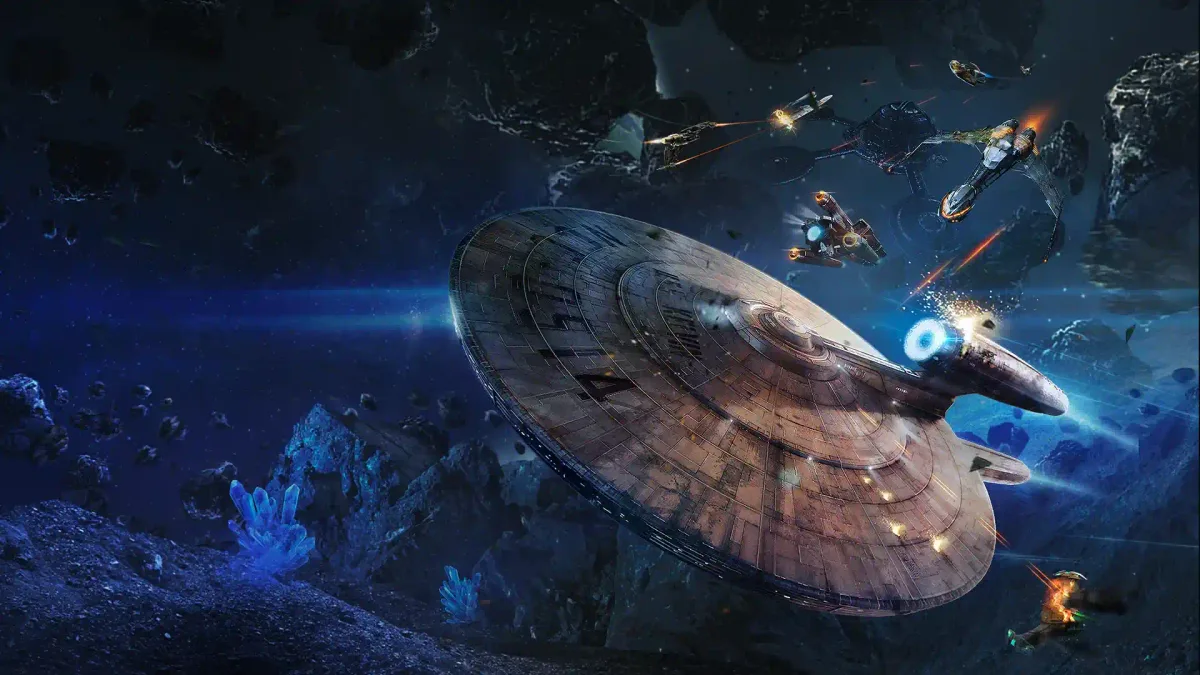
Fire up Star Trek Fleet Command for the first time and it does the one thing a licensed game absolutely has to: it makes you feel like you're in it. There's your station hanging in the dark, there's a real ship you can send out to warp between systems, and there's a voice line from a character you've watched on screen for decades. For about a week, that novelty carries everything. Then the timers show up, and you meet the game the veterans actually play.
Star Trek Fleet Command has been running since 2018, and as it closes in on its eighth anniversary under Scopely, it's one of the most successful mobile 4X games ever made — now perfectly playable on Windows through the official PC client. It's also a textbook example of how far a great license and a smart core loop can carry a game, and exactly where free-to-play design starts pulling in the other direction. We've put in the hours across the early and mid-game so you can decide whether it's worth yours.
A galaxy that actually feels lived-in
The pitch is classic 4X — explore, expand, exploit, exterminate — bolted onto a persistent MMO map you share with thousands of other commanders. You start with a battered station and a single ship, and the map opens up in layers: new systems, new factions, new ships, new officers to crew them. It's paced well. There's almost always a next thing dangling just out of reach, whether that's a hostile worth farming, a mission chain with a story beat, or a resource node you need to hit before someone else strips it.
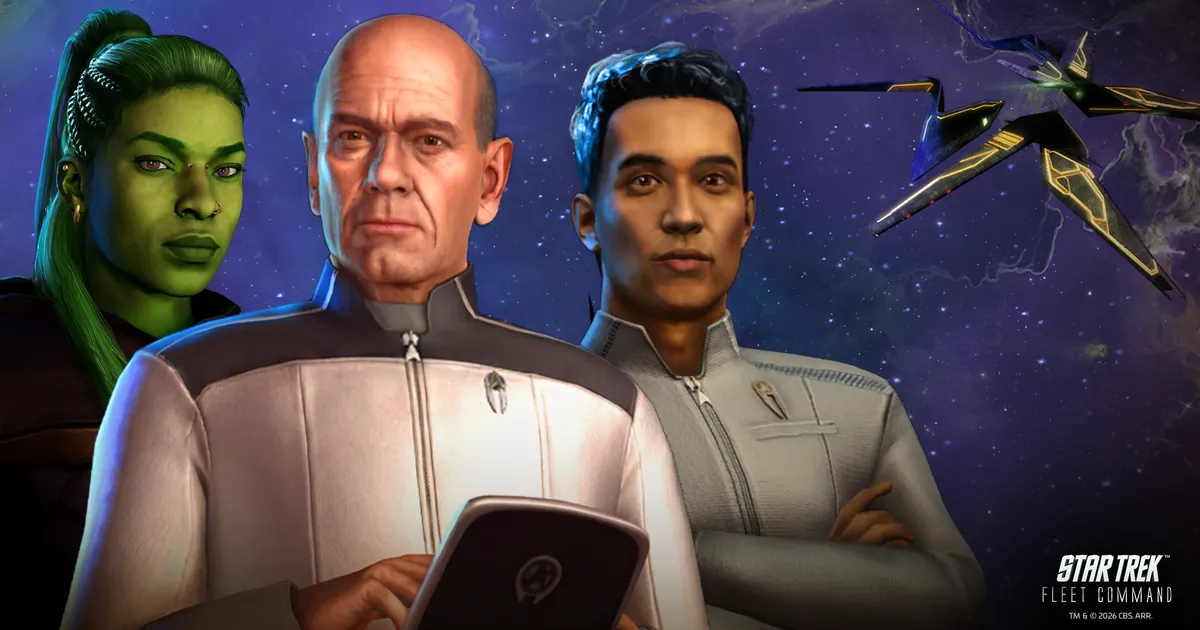
What sells it is the presence of the license. Ships aren't generic hulls with reskins — you're chasing the Enterprise, working faction reputation with the Federation, Klingons and Romulans, and pulling recognizable officers whose abilities actually change how your ships fight. Crewing a ship well is a real puzzle: the right officer combination can swing a battle you had no business winning. When it clicks, Fleet Command delivers a fantasy no other mobile strategy game can, because no other one gets to use this universe.
The alliance layer is where the game finds its legs long-term. A good alliance is a 24/7 organism — members donating resources, coordinating armadas against tough targets, and defending territory during events. It's genuinely social in a way solo play never captures, and it's the single biggest reason people stay in for years.
The timers never sleep
Here's the wall. Almost everything meaningful in Fleet Command is gated behind a timer or a research bar. Upgrading your station, your ships, your buildings, your research tree — each is a countdown, and the countdowns stretch from minutes in the early game to days later on. This is the free-to-play strategy template, and Fleet Command follows it faithfully: the game is often less about playing and more about scheduling, checking in to start the next build and log off.
Layered on top is a currency problem that's become almost a meme in the community. There are so many overlapping tokens, materials, shards and premium currencies — each locked to specific uses — that just reading your own inventory takes a mental map. For free players especially, that complexity isn't depth; it's friction. Progress that should feel earned instead feels metered out, and the "solution" the game keeps nudging toward is, of course, your wallet.
Progression is also strikingly linear. Because construction prerequisites are chained so tightly, nearly everyone climbs the same ladder in the same order. You rarely feel like you're outsmarting the system — you feel like you're feeding it on schedule.
The monetization is testing its own fans
Fleet Command has always leaned on microtransactions, but the past year has been rockier than usual. The battle pass overhaul rolled out with a recent update landed badly — a lot of the community read it as squeezing more money for less, and player feedback around it has been some of the harshest the game has seen. Scopely, to its credit, patches weekly and has publicly acknowledged sore spots, including how repeated targeted PvP and resource protection are handled ahead of the anniversary.
That resource protection issue is a real one. The way shields work at higher levels means a short protection window can leave you exposed for hours afterward — brutal if you're not the type to build your whole day around log-in timing. And endgame PvP tilts hard toward whoever spent the most, which is the usual ceiling on games like this: the early and mid-game are a fair, fun climb; the top of the ladder is a spending contest.
To be clear, none of the campaign, exploration or PvE content is locked away. You can play free, and plenty do. But past the mid-game the meter slows to a crawl, and the game gets louder and louder about how a bundle could fix that.
Who it's actually for
If you want a game to sit down and play for an hour, this isn't it — the loop is built around dipping in, queuing upgrades, and coordinating with your alliance across a day. But if you're a Trek fan who likes the idea of slowly building a corner of the galaxy, learning the officer meta, and belonging to a crew that plays together, there's a genuinely rich game here. Find an active, friendly alliance early. It's the difference between Fleet Command being a chore and being a hobby.
Verdict
Star Trek Fleet Command is a smart, sticky 4X MMO wearing the best license it could ask for, and when the exploration, ship-building and alliance play line up it's hard to put down. The trouble is everything wrapped around that core: the timers, the currency sprawl, and a monetization push that keeps poking its own audience. It's better experienced free, in a good alliance, with clear eyes about how far the climb goes before the wallet becomes the real gate.
Rating: 6.8 / 10 — A living, likable Star Trek galaxy held back by grind and a greedy meta-game.
Pros
- Nails the Star Trek fantasy: real ships, factions, and voiced characters you actually recognize
- Deep, persistent MMO with a genuinely active alliance layer
- Plays well on Windows through the official client — big screen, mouse, no phone battery drain
- Constant events and a universe that keeps expanding after eight years
Cons
- Progression runs on upgrade timers and a maze of overlapping currencies
- The recent battle pass overhaul soured a big chunk of the community
- Endgame PvP and resource protection heavily favor spenders